Thursday, October 8, 2020

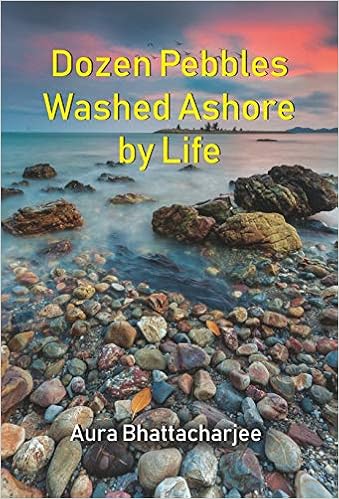
Dozen Pebbles Washed Ashore by Life by Aura Bhattacharjee (Book Review: 3*/5)


34th Book of 2020..


Well, recently I have ended up reading couple of anthologies so this time I thought of reading something which isn’t the usual stuff and talks about something that is really motivated towards some commonalities in all the stories. Hence, I picked up Aura Bhattacharjee’s “Dozen Pebbles Washed Ashore by Life” which comprises of 12 different stories – all talking mainly about women and their lifestyles and thoughts. All of us know the kind of sacrifices a woman makes to keep everyone happy around her and hence reading about how a woman feels herself of this is always a curiosity. 


An anthology makes sense if all the stories are somewhere tied up with each other otherwise it just looks like compilation of several unrelated stuffs bought together just for the sake of publishing a book. Authoress have kept a good care of this and all the story somewhere seems connected – either by the warmth that all of them carry or the set-up in which they are scripted. Though the stories are short of around 7-9 pages – still, they have so much to say and deliver that you shall be able to relate it with your life or situations that you have been in.


Aura has used very simple language while writing this book which makes its target audience wider – it can be read by anyone right from an 8 years old kid to 80 years old grandma. I appreciate how authoress hasn’t used any kind of abusive or sexual elements to make the story exciting but kept things natural and sober which makes it a light read. I liked how even with short stories authoress has managed to make her characters powerful and relatable. It’s tough to develop the characters in short stories due to which readers don’t generally pick it up but I am glad Aura has shown how it can still be done. I liked how she has written stories as both - a third person and first person as it has helped in giving diversity to the narration of each story.


In the 3rd story itself, the mention of Mumbai made me happier as I have been living here for more than a decade now and the set-up of monsoon made it more nostalgic – the way the protagonist is fighting with it after a bad day – but watching a passenger with smile and steadiness even with a larger difficulty in life than her gives a life lesson to both- the protagonist and the readers. “The Vows” is about a divorced lady, a mother of 15 years old daughter finding the beauty of relationship with a new man in her life who appreciates her flaws as much as her good qualities.


“Didis” is another insightful chapter which conveys a beautiful message so aptly about how the housemaids deal with their life and its challenges – which is generally ignored by us but it is what white-collared ladies talk in their presentations while discussing Women empowerment in big conference halls. “Chicago” is very nicely written. The whole chapter seems like a cold breeze that you love to feel and experience. The way the city, its winter and the friendly people are defined makes you want to be at the protagonist’s place to be there once on a small trip. “Krishnokoli” is another deep chapter where the protagonist realizes how travelling can develop perspective which wasn’t an angle in which she looked at her lifestyle before. She immediately takes decision which shall make her life easier once she returns back to her workaholic and social life.


Now, talking about the drawbacks- I must say the grammar and typos are let-down for this book as you definitely don’t expect that in anthologies where taking care of these elements is very easy. There are few stories which doesn’t deliver great message nor the stories leave any kind of mark hence it would have been great if all the stories would have been strengthened by the author.


Overall, this is a fine attempt and I give it 3 stars out of 5.


PURCHASE THE BOOK HERE


Thanks.


WRITING BUDDHA 


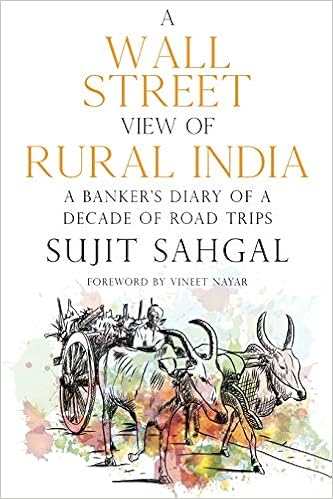
A Wall Street View of Rural India by Sujit Sahgal (Book Review: 4*/5) !!!


33rd Book of 2020


Every time, we talk about developing India, we end up discussing about the life of farmers and the state of agriculture in India. All of us are aware that for a population of 140 crores to be able to have food on their plate, agriculture remains to be the backbone of the nation. Knowing all of these, how many of us are aware about how farmers are struggling with their lifestyles and what process are followed by them to make the crops and produce reach us, the common people? We know nothing and hence when I got to know about this book titled “A Wall Street View of Rural India” written by Sujit Sahgal, I picked it up as the tagline on the cover page “A Banker’s Diary of a Decade of Road Trips” and the artwork attracted me. The synopsis gave more insights about these 180-pages book which is published by Olympia Publication.


Sujit Sahgal’s book is divided into 5 different sections where author talks about several aspects of a farmer’s life in the rural economy: 1. Earning & Spending Power, 2. Borrowing & Leverage, 3. Infrastructure, Market Structure and Supply chain, 4. Social aspect and Women empowerment and 5. Demographic of agriculture in future. 


The author has personally travelled around many villages in India with some key experts and has ended up taking 300-400 interviews and everything that has been mentioned is not from the data collected from different sources but what has been observed personally. Author gives us a disclaimer that what the farmers and the people belonging to the ecosystem has said in the interviews might not be true as they must have hidden something or said something in extreme out of fear or hope. But still, after going through all the challenges of the farmers in the book, I feel that most of it seems to be the ground-level concerns for now.


As we know, when we talk about economy, there are many jargons which doesn’t let us get much into the topic and therefore, it becomes very crucial for the authors to ensure that either it is explained well or not used in the book. Here, Sahgal has not used much of the terms and wherever he did, he gave explanation for the same which made reading the book enjoyable and easy. Author starts the book with how MSP is set-up and how much a farmer earns and what is his spending power. From here, we get to know how earning a decent amount of money is still a challenge even after several reforms and how savings are still not part of a farmer’s lifestyle as all that comes get spent in food and basics.


Further, author talks about the culture of Borrowing among the farmer community which is so prominent that many farmers rely upon the same. The chapters also throw light upon the debt under which farmers go either by will or by the schemes where even the down-payment for purchasing tractor can be paid on instalments. Author discusses the features of KCC – its pros and cons and how farmers misuse it knowing that their debt and loan shall be repaid by political parties during election times. The aspect of Jan-Dhan yojna is also discussed widely.


Author also discusses about the APMC model which was brought into place in 1970s and how it is effective as well as the drawbacks and challenges of it. Later, author focuses on how E-nam system is better than APMC considering the payment is immediate and things are more transparent here. I personally liked reading the 4th section which discusses about how children of farmers are actually focusing on studying and getting a white-collared job rather than getting into the same domain as they are well aware about the financial crunches their upper generations have seen. How Beti Padhao movement has ended up having more girls in school than boys is a positive news. Even the wives of farmers are working as heads now – even though with little guidance from their husband but are keen to be on the position.


In the last section, author discusses about what would be the demographics in agriculture and farming industry in the future as all the children of farmers are now educating themselves for getting to city for a white-collared job – but it’s good to read that there are many who have felt so much stressed out in the urban lifestyle that they are getting back to agriculture. Also, how the agriculture would change with the advent of Internet and technologies like Artificial Intelligence, Robots etc. is nice to learn.


Overall, reading this book is like knowing an overview of how farming happens in India and the process of how it reaches finally to the end consumers. The book is written in simple language which makes it easy to understand. I am glad author haven’t gone much into depth otherwise it must have become difficult to go through the whole book.


Now, talking about the drawbacks- Firstly, there are many instances where a paragraph has ended after two pages which really makes it difficult to read. Author should have used more bullets and pointers rather than writing his findings in form of paragraphs only. Also, diagrammatical representations would have made many data findings easier to understand. I was expecting insights on farmer suicides etc. but that part is completely ignored in this book. As this book is based on author’s personal experiences of traveling across villages, the pictures of those would have also added charm to this insightful and informative book. Though, in the last chapter of “Conclusion”, author has given some 3-4 pointers as to what improvements is needed – I was expecting many solutions across chapters from authors for the challenges discussed.


I would give this book 4 stars out of 5 for its genuine efforts and the kind of insights it provides to us as we get to know what our farmers are going through.


PURCHASE THE BOOK HERE


Thanks.


WRITING BUDDHA 


Wednesday, October 7, 2020

Secret Admirer by Deepesh Junwal (Book Review: 4*/5) !!!


32nd Book of 2020!


There are few books which are written on topics that can trigger various kind of emotions within you which makes it very difficult for you as a reader to grasp the whole book in a single sitting. This made me read the latest book written by author, Deepesh Junwal, named “Secret Admirer” which is of around 180 pages published by Xpress Publishing house in several sittings to ensure that I can grasp the story. The book also comes with a tagline which says “A Satan exists in every Introvert” with which I don’t agree completely as “Satan” is a very big negative word to associate with all the human beings falling in this personality type. 


The writing style of Deepesh is simple and straight-forward which makes it easy for you to go through the story without worrying about the vocabulary and its meaning. The way author has planned the narration of the story is excellent as we are taken through two different time frames with completely different set of characters except the protagonist who remains to be common in both of them. I liked the transition while reading as otherwise if the story would have continued in a linear format, it would have become boring in either of the halves of the book. The concept of Diary notes is nicely embedded in the plot which makes the read exciting.


The characterization of the protagonist, Ankit, is defined very well. Right from the 1st page, it is his opinions, perspective, charm, introvert-ness, love, behaviour, thoughts and activities that keeps you engaged with the book. Up to some extent, you also empathize with him and then you start supporting him even when he starts indulging in criminal activities. It is not easy to write around such character but Junwal has managed well. Other than him, the characterization of ACP Abhinav is also nicely written as you are able to connect even with him up to certain extent and you like the way he takes up the case. His backdrop makes reading even about him interesting where the protagonist is not the part of the chapter.


Author has very nicely woven the tales of Mahabharata in the story which makes it more informative, interesting and exciting. Someone like me who enjoys mythology and epic and believes in God shall enjoy reading this section. Again, along with the tales, the way it has been connected with the crime scenes makes it more effective and powerful part of the book. I really enjoyed this segment and I also believe this theme is the USP of the book.


There’s a chapter in which what a rape victim has to go through is narrated and reading that was so chilling that I almost stopped feeling my legs. Author has narrated it very well using a poem which makes it so effective that you are able to feel what a victim ends up suffering in such heinous crimes they are unfortunately met with.


Talking about the drawbacks of the book – The grammar in the writing is not very strong due to which author couldn’t do justice to few emotions of the protagonist in the Diary sections. As the book has crime as one of its main plot, the story could have also been written in the thriller format which could have given it a completely different dimension. Thirdly, I feel we get to know very less from Bhoomi’s perspective about how she is considering things which could have also been added as another aspect. Lastly, the cover page of the book could have been designed more nicely as currently, it might not fetch a reader’s attention.


Overall, this book is a very nice one-time light read which shall still make you shiver as the protagonist is quite similar to that of the movie Raman Raghav. I give this book 4 stars out of 5. Give it a chance!


PURCHASE THE BOOK HERE


Thanks.


WRITING BUDDHA 


About Me

My photo
Book Reviewer | Movie Reviewer | Bibliophile | Business Analyst