Showing posts with label Anthology. Show all posts

Sunday, June 28, 2026

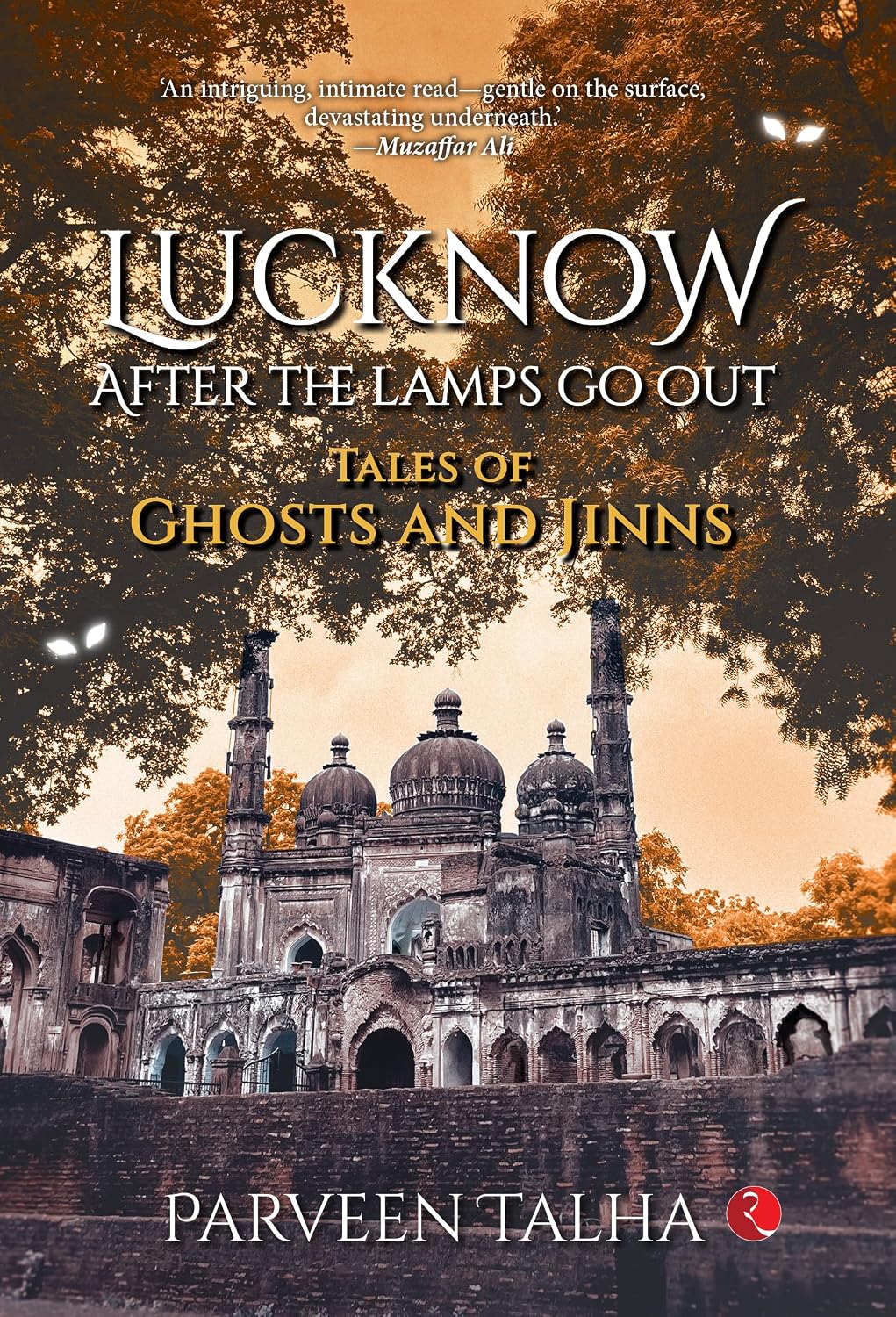
Lucknow, After the Lamps Go Out by Parveen Talha (Book Review: 4*/5) !!!


11th Book of 2026


Whenever we hear the words ghost stories, we usually expect haunted mansions, eerie forests, or terrifying supernatural encounters. However, Lucknow, After the Lamps Go Out: Tales of Ghosts and Jinns by Parveen Talha offers something far more fascinating. It is less about frightening the reader and more about introducing them to the rich folklore, forgotten legends, and cultural beliefs that have quietly survived through generations in the City of Nawabs. The book is published by Rupa Publications in around 135 pages only which makes a perfect companion for you on a weekend or travel.


This is not a conventional horror novel. Instead, it is a beautifully woven collection of tales where history, mythology, superstition, faith, and human emotions coexist. As someone who enjoys stories rooted in local culture, I found this approach refreshing. The author doesn't merely narrate ghost stories; she preserves an entire oral tradition that might otherwise disappear with time.


What makes the book particularly engaging is its atmosphere. Lucknow itself becomes a character. Its old lanes, magnificent havelis, forgotten graveyards, ancient mosques, and silent corners provide the perfect backdrop for stories involving mysterious apparitions and elusive jinns. Even if you have never visited the city, the vivid descriptions transport you there, making you feel as though you are listening to these tales from an elderly storyteller on a quiet evening.


One aspect I appreciated throughout the book was the author's balanced narrative. She neither forces the reader to believe in the supernatural nor dismisses these stories as mere fiction. Instead, she presents them with respect, allowing readers to decide for themselves where folklore ends and reality begins. That neutrality adds authenticity to the storytelling.


The stories themselves vary in tone. Some are genuinely eerie, while others are melancholic, mysterious, or even philosophical. There are moments when you expect a shocking revelation, only to find yourself contemplating human fears, loneliness, faith, or destiny instead. This emotional depth prevents the collection from becoming repetitive and keeps the reader invested until the very end.


Parveen Talha's writing deserves special appreciation for its simplicity. Despite dealing with subjects that could easily become overly dramatic, her language remains elegant, measured, and accessible. She doesn't rely on exaggerated horror elements or unnecessary jump scares. Instead, she allows the setting, the characters, and the quiet mystery surrounding each incident to create a lingering sense of unease. That subtlety makes the stories far more effective than loud horror ever could.


The book also offers glimpses into Lucknow's cultural heritage, traditions, and social fabric. Readers unfamiliar with the city's history will appreciate how naturally these details are woven into the narratives without interrupting their flow. In many ways, this book serves as both a collection of supernatural tales and a tribute to the city's timeless charm.


What I particularly enjoyed was that the stories stay with you even after you finish reading. They don't necessarily make you afraid to switch off the lights, but they do make you wonder how many unexplained stories every old city quietly hides within its walls. The author successfully captures that thin line where imagination meets inherited belief.


Having said that, readers expecting fast-paced horror or edge-of-the-seat thrills may find the pace relatively gentle. This is a book best enjoyed slowly, almost like listening to bedtime stories narrated by someone who genuinely believes every word they are saying. The charm lies in its storytelling rather than its scares.


Overall, Lucknow, After the Lamps Go Out is an absorbing blend of folklore, history, mystery, and culture. It reminds us that every city has stories that never make it into history books but continue to live in whispers, legends, and memories passed from one generation to another. Parveen Talha has done a commendable job of preserving those whispers in written form.


If you appreciate regional folklore, atmospheric storytelling, and books that celebrate India's cultural heritage through unusual narratives, this collection deserves your attention. It is a gentle reminder that sometimes the most memorable ghost stories are not the ones that terrify us, but the ones that make us look at familiar places with completely new eyes. I really liked how few stories tells about these super natural elements providing justice to the human beings who didn’t get it otherwise. Overall, this was definitely a unique read. I would give this book 4 stars out of 5.

PURCHASE THE BOOK HERE

Thanks!


WRITING BUDDHA


Tuesday, December 16, 2025

The Rabbit in the Moon by Meena Arora Nayak (Book Review: 3.25*/5) !!!


22nd Book of 2025

Some books do not rush to impress; they sit quietly beside you, like a wise elder, waiting for the reader to slow down. The Rabbit in the Moon by Meena Arora Nayak is one such book. Rooted in the timeless wisdom of the Panchatantra, it brings back stories many of us may have heard in fragments during childhood, yet presents them with a freshness that feels both comforting and relevant.


The book retells two powerful tales: The Tale of How the Bedbug’s Selfishness Cost the Louse Her Life and The Tale of How the Rabbit in the Moon Saved His Relatives. Though simple on the surface, both stories gently unfold deeper truths about life, choices, and consequences. The author’s language is lucid and unpretentious, allowing the moral to emerge naturally rather than being forcefully stated. This makes the reading experience meditative rather than instructional.


What stands out is how effortlessly these ancient stories mirror modern realities. The tale of the bedbug and the louse is a quiet reminder of how reckless behavior, impatience, and selfish ambition can destroy not only the wrongdoer but also the innocent. It speaks subtly about the dangers of bad company and poor judgment—lessons that remain painfully relevant in today’s fast-paced, outcome-obsessed world.


On the other hand, the story of the rabbit offers a soothing counterbalance. It celebrates intelligence, calm thinking, and moral courage over brute strength. The rabbit’s wisdom becomes a metaphor for leadership rooted in compassion and clarity, reminding readers that true power lies in presence of mind rather than physical dominance.


Meena Arora Nayak deserves appreciation for preserving the soul of the Panchatantra while making it accessible to young readers and equally meaningful for adults. The Rabbit in the Moon is not merely a children’s book; it is a gentle pause, a reflective read that invites us to look inward.


In a world that constantly urges us to run faster, this book softly asks us to think wiser—and that, perhaps, is its greatest strength. The biggest drawback of the book is its cost- Rs. 250 which I believe is quite much considering it has just two short stories for little Kids. Publishers must think something about this. Overall, I give this book 3.25* out of 5.

 PURCHASE THE BOOK HERE

Thanks!


WRITING BUDDHA

Monday, December 15, 2025

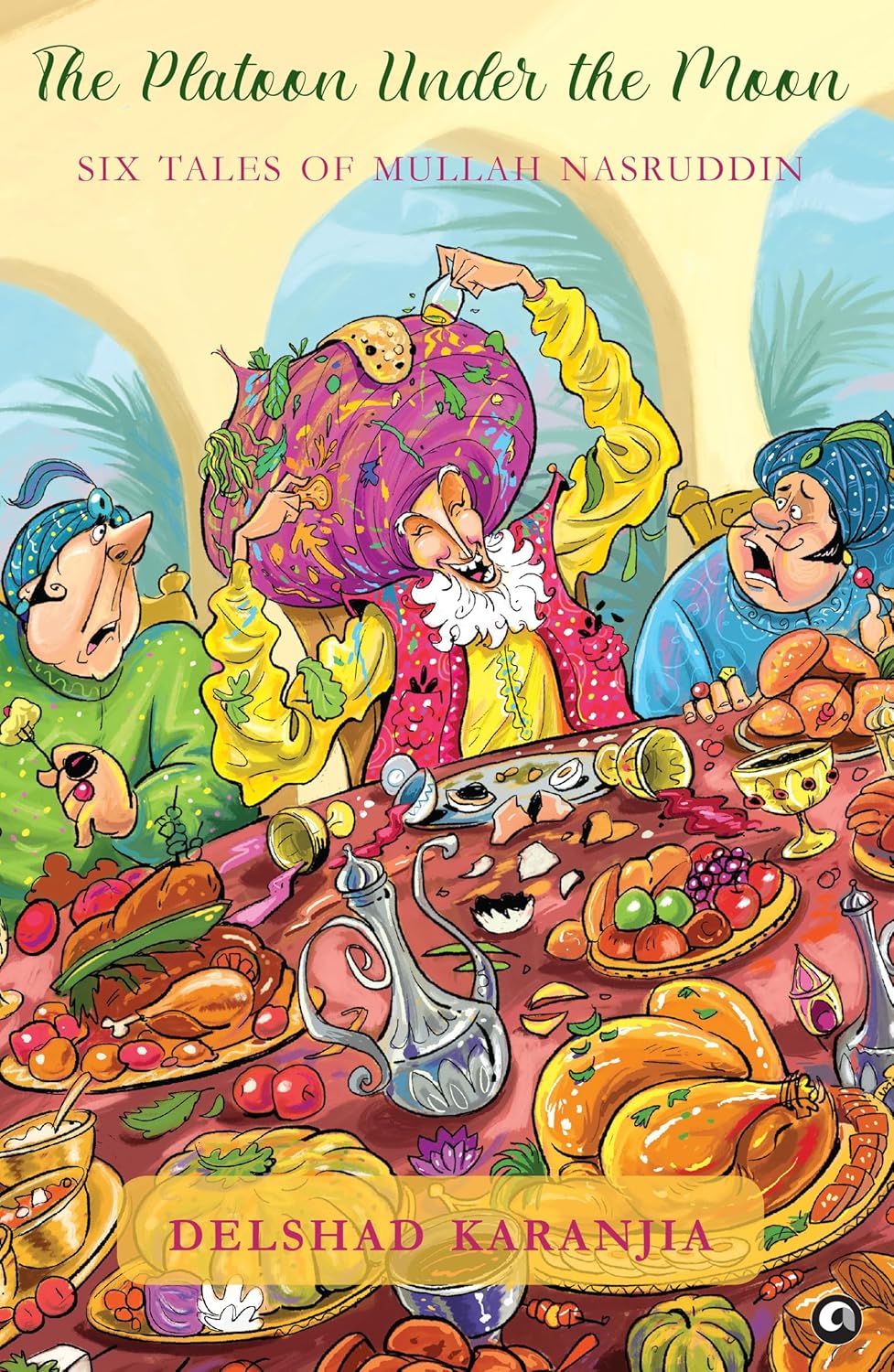
The Platoon Under the Moon by Delshad Karanjia (Book Review: 4.25*/5) !!!


21st Book of 2025

Another book by Delshad Karanjia was finished within half an hour, with a smile on my face. Another set of six tales based on the character of Mullah Nasruddin felt like reading funny WhatsApp messages shared by a friend. There are many books written for children with the intention of teaching values or lessons, but Delshad’s attempt here highlights why it is equally important to tell stories to children purely for fun, without attaching any strong educational agenda to them.


Of course, the narration, story structure, and language still help students learn the art of storytelling, writing, and visualization. However, the author’s primary intention—to simply make children laugh through these stories—is what makes this book special. In this collection, Mullah Nasruddin’s six tales are crafted in a way that showcases how cleverly he outwits both the good and the bad people in society.


Through two of the stories, we see how he troubles his teacher and a shopkeeper, while another story humorously conveys how he makes the host of a party realize that people should be valued more than their rich attire. The story that shares the book’s title is another amusing take, highlighting how Mullah sometimes chooses not to use his brain at all.


The illustrations are well done and can also encourage children to draw and add their own colours. These are stories that children will not only enjoy reading but will also eagerly share with their friends, spreading laughter all around. I give this book 4.25 stars out of 5.

 PURCHASE THE BOOK HERE

Thanks!


WRITING BUDDHA

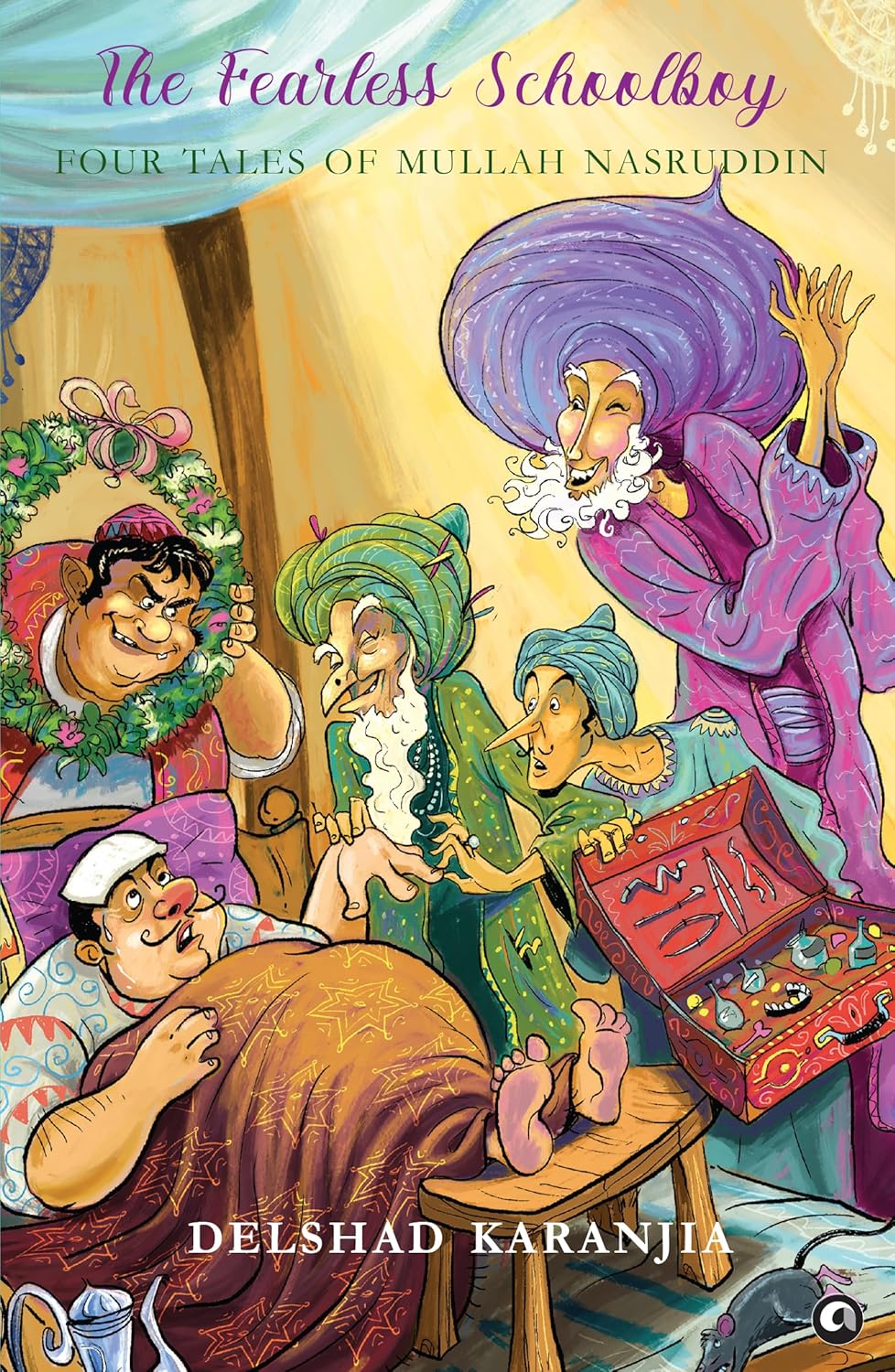
The Fearless Schoolboy by Delshad Karanjia (Book Review: 4.5*/5) !!!


19th Book of 2025

I have just completed reading Aleph Publication’s children’s book titled “The Fearless Schoolboy”, written by Delshad Karanjia. This is a short anthology consisting of four tales featuring Mullah Nasruddin. The book includes four different stories with Mullah Nasruddin as the main protagonist, portrayed through a humorous caricature where he acts smart in some stories and completely plays dumb in others. However, all the stories are designed to provide entertainment along with a meaningful message, helping children understand important life lessons through simple examples and storytelling.


The four stories included in this book are Cha and Chat, No Shortage of Advice, Preacher’s Block, and Planning Ahead. The first story did take me some time to adjust to the author’s writing style, but the remaining three stories completely engaged me as a reader. The second story, No Shortage of Advice, lives up to its title perfectly. It cleverly highlights how people never stop giving advice or pointing fingers, no matter what you do. The humorous tone of the story keeps the reader hooked throughout.


The third story, Preacher’s Block, is another amusing take on how the protagonist behaves lazily while performing his duties, assuming that no one is monitoring his actions. This continues until he is finally reprimanded. The moment an ultimatum is given, the sudden shift in his behaviour, driven by fear, leads to a funny and satisfying conclusion.


The fourth and final story, Planning Ahead, is once again a humorous tale where the protagonist follows his master’s instructions like a robot, without understanding the context. This blind obedience ultimately results in a laugh-out-loud ending.


Overall, this book is a great choice for children to enjoy light-hearted reading while also developing a sense of humour along the way. I give this book 4.5 stars out of 5.

 PURCHASE THE BOOK HERE

Thanks!


WRITING BUDDHA


Sunday, December 14, 2025

The Four Avengers Versus the Elephant: Two Tales from the Panchatantra by Meena Arora Nayak (Book Review: 4*/5) !!!


15th Book of 2025

Reading children’s books can be quite interesting when you want to read something light while having tea or coffee at someone’s home—especially when they have kids for whom such books have been purchased. I took advantage of a similar opportunity and read a book titled “The Four Avengers Versus the Elephant” published by Aleph. The book consists of two tales from the Panchatantra, retold by Meena Arora Nayak.


The book is meant for children above the age of nine, as the author has ensured that even though her stories are targeted at kids, they are written in a way that imparts knowledge beyond the basics. I, as someone in my mid-30s, could also find wisdom in the way these stories are narrated. Nayak uses conversations between animals as a medium to deliver life lessons and Chanakya-like insights. Many dialogues are written in a manner that resembles explanations of ancient Sanskrit shlokas.


The first story focuses on the qualities and responsibilities of a king. Within the same tale, the author highlights how a vulnerable animal like a hare can outsmart a mighty lion who is ready to kill and eat him. The way the hare leads the lion to his own death is told very intelligently and gives hope to anyone who considers themselves weaker than others.


Similarly, the second story narrates how four small animals and insects unite to defeat an elephant who had been troubling one of their friends. This story beautifully signifies how the power of unity can bring even the most powerful to their knees.


Overall, I loved reading this book. I rate it 4 stars out of 5. I just feel that children’s books like this shouldn’t be priced as high as they often are — hopefully, publications can find a way to make them more affordable.

 PURCHASE THE BOOK HERE

Thanks!


WRITING BUDDHA

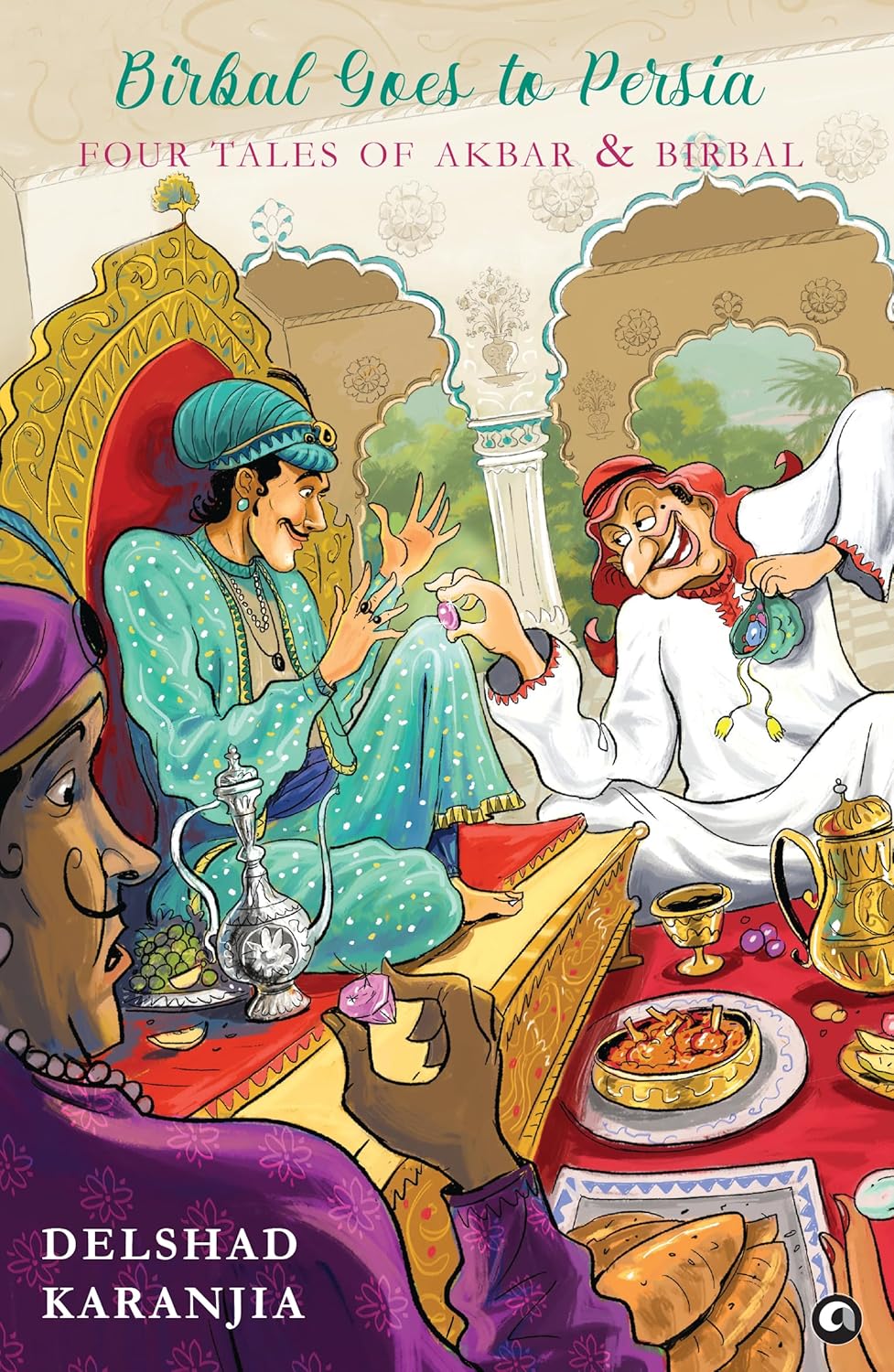
Birbal Goes to Persia: Four Tales of Akbar and Birbal by Delshad Karanjia (Book Review: 4*/5) !!!


14th Book of 2025 

I remember my father instilling the habit of reading books in me right from my primary schooling days. One of the most popular stories during those years was the Akbar-Birbal tales. I used to think that kids these days wouldn’t be reading about Akbar and Birbal, but I was pleasantly surprised when I found a few such books at one of my relatives’ homes. It took me just 20 minutes to complete this book titled “Birbal Goes to Persia,” which consists of four tales of Akbar and Birbal — all distinct from each other. The stories have been retold by Delshad Karanjia, who has been a journalist by profession.


All the stories are witty, funny, and humorous, and each provides a life lesson at the end. The first story in the book, A Lesson for the Emperor, tells a tale where Birbal gives a profound lesson to Akbar, making him realize that everything in life is temporary and that worldly possessions do not belong to anyone permanently, as every person is merely passing through Earth and must die one day.


The second story, Birbal and the Shah, is another example of Birbal’s cleverness, where he manages to impress both his own king as well as the ruler of another country by complimenting each of them in their respective presence — changing the perspective of his statements in both instances.


The third story, Catching Thieves, actually tells two different tales where Birbal faces the challenging task of finding a thief. He uses his intelligence and gives a task to the suspects, through which he cleverly identifies the real thief without conducting any formal investigation.


The fourth story, A Tax on Fools, serves as a fitting conclusion to the book. It narrates how Birbal challenges Akbar’s idea of imposing a tax on fools and, in turn, proposes imposing a tax on wise people instead. This was the first time I read this particular story, and I really liked it.


Overall, the book is engaging, and children are definitely going to enjoy it. I give it 4 stars out of 5.

PURCHASE THE BOOK HERE

Thanks!


WRITING BUDDHA


Saturday, October 25, 2025

The Fierce and the Free by Virender Kapoor (Book Review: 4.5*/5) !!!


9th Book of 2025


This Independence Day, I decided to revisit my childhood and read the kind of books that shaped those years. I picked up “The Fierce and the Free” by Virender Kapoor, published by Rupa Publications. The tagline itself tells you what the book is about — “25 True Tales of India’s Boldest Freedom Fighters.” Kapoor has written a book that can be equally engaging for a child in 4th grade as well as for a 70-year-old reader.

Year after year, we keep reading and hearing about the same prominent figures — Mahatma Gandhi, Jawaharlal Nehru, Bhagat Singh, Subhash Chandra Bose, and a few others. But there are countless lesser-known heroes who were equally instrumental in securing India’s freedom. Kapoor revives their stories and introduces readers to these forgotten fighters, allowing us to rediscover the freedom struggle from a fresh perspective.

At one point, the book highlights famous figures like Rani Lakshmibai, Bal Gangadhar Tilak, and Bhagat Singh, while at another, it brings to light inspiring yet lesser-known names such as:

  • Sido and Kanhu Murmu – who led the Santhal Rebellion of 1855–56 against British rule and exploitative landlords.

  • Matangini Hazra – who, even when shot by the police, continued chanting “Vande Mataram.” Her courage at an advanced age remains a symbol of indomitable spirit.

  • Baji Rout – India’s youngest martyr, only 12 years old, from Odisha. He was shot dead by British police for refusing them passage across a river during a protest. His fearless act became a rallying symbol of youth resistance.

Each chapter is dedicated to one freedom fighter and doesn’t extend beyond five pages, making it easy to read and grasp the essentials of their stories. For readers who wish to explore further, it’s a great starting point — for example, after reading about Baji Rout, I couldn’t resist researching more about him online.

Virender Kapoor doesn’t follow a typical biographical style listing parents’ names, birthplaces, or dates of birth. Instead, he divides each chapter into clear sub-sections and narrates the most defining events from each person’s journey in India’s struggle for freedom.

The book also reveals how many of these revolutionaries were connected — either by geography, ideology, or shared missions. A few fascinating interrelations that I learned from the book include:

  • Sido and Kanhu Murmu, Mangal Pandey, Rani Lakshmibai, Tantia Tope — all part of or inspired by the 1857 Revolt, India’s first organized rebellion against British rule.

  • Tilak, Pal, and Lala Lajpat Rai formed the Lal–Bal–Pal trio, symbolizing early assertive nationalism.

  • Tilak’s writings inspired younger revolutionaries like Savarkar, who later founded secret societies in London and India.

  • Chittaranjan Das influenced Bengal’s revolutionary network, which produced figures like Khudiram Bose.

  • Kartar Singh Sarabha (Ghadar Party) inspired Bhagat Singh, who called him his “guru.”

  • Bismil, Ashfaqulla Khan, Rajguru, Sukhdev, and Azad were all linked through the Hindustan Republican Association (HRA), later renamed Hindustan Socialist Republican Association (HSRA).

  • Khudiram Bose, Basanta Biswas, and Amir Chand were part of Bengal’s earlier revolutionary network that influenced the HRA’s strategies.

  • Sardar Udham Singh admired Bhagat Singh and drew inspiration from his ideals of revenge and justice.

  • Captain Lakshmi Sahgal headed the Rani of Jhansi Regiment under Subhash Chandra Bose’s leadership.

Now, speaking of drawbacks — I feel the author could have managed these interconnections between fighters more cohesively. At times, the repetition of overlapping events makes a few chapters sound familiar, as similar incidents are retold from different perspectives.

Other than that, this is a perfect book for school students — something you can gift them without hesitation. It’s informative, patriotic, and inspiring without being heavy or monotonous.

I give this book 4.5 stars out of 5.


PURCHASE THE BOOK HERE

Thanks!
WRITING BUDDHA

Friday, April 30, 2021

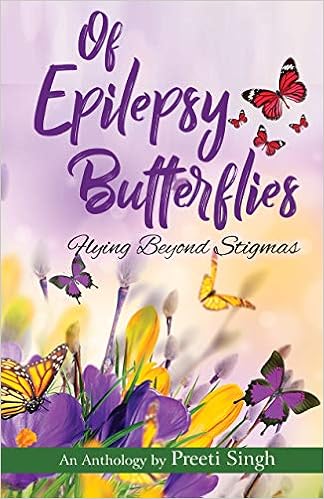
Of Epilepsy Butterflies: Flying beyond stigmas by Preeti Singh (Book Review: 4.5*/5) !!!


16th Book of 2021


It is always a pleasure getting back to reading an author whom you had read many years ago. I am talking about Preeti Singh here. I had read her first book in 2012 named “Flirting with Fate” when I was really very new to the reading world. I had liked that book and given it a good rating of 4 out of 5. It has taken almost 9 years that I have again got a chance of reading her latest work named “Of Epilepsy Butterflies” which also comes with a tagline that says “Flying beyond stigmas”. This is an anthology-kind of a book which has been compiled very nicely by the authoress. The book is written with a very good purpose of giving motivation to the people who are affected by epilepsy and guiding others to not treat PWE (people with epilepsy) as criminals or untouchables. The book tries its best to break this stigma and taboo from the society.


To make it easier for everyone to understand, epilepsy is popularly known as “mirgi” or “mirgi ke daure” in India. Personally, I have never encountered any PWE in my life hence I didn’t know the problems they have to suffer themselves as well as the situations their family members have to go through because of societal approach towards them when they come to know about such patients. Whenever there is any seizure attack that happens in a public place, the person is seen differently. People start distancing themselves from the person and almost boycott him/her. Reading about such stories in this book made my heart felt so weak and exploited that even when I don’t suffer from it or don’t have anyone in my family, I could still feel the plight of the people who go through it.


Preeti Singh, the authoress, is herself a PWE and has been suffering the disease since she was 2 years old. She has seen enough in her life because of the continuous seizure attacks she has been getting since then. She has been very good in letting us understand through her personal account in one of the chapters in detail about what she went through at every stage of her life. Her note was so horrific to read that I couldn’t comprehend what goes in people’s mind to think ugly for a girl/woman suffering from PWE that they go further to physically abuse and molest her. She also tells how her beautiful marriage failed just for this reason as her in-laws couldn’t accept this daily trouble. Her challenge in school, college, office, relationships, pregnancy etc. makes us understand that how less educated we are about epilepsy and the people who go through it.


This anthology includes many personal accounts of people suffering with PWE and how they conquered it without losing themselves and their willpower with the challenges and obstacles that comes up with this disease. Ketaki Chitale, the actress, tells us how doctors misguided her which took her 19 years to accept her condition. Jitendra Gunti's story is one of the most effective accounts on how he suffered in school due to his seizure attacks and still being a good student, he ended up failing regularly till his Master's course. I liked how spirituality helped him accept his situation. But reading about how an NGO expelled him for being PWE was really heart-breaking to read.


Harsheen, Preeti Singh’s daughter’s version-  of how the authoress used to get seizure attacks during sleep sounds so scary but the way she handled it knowing that epilepsy needs to be dealt calmly tells us about the bravery of PWE’s family members even when they are a child themselves who needs to be taken care of. All the other accounts are equally impactful and leaves a mark in your thought process for the kind of life a PWE expects to live and the expectations they have from us of nothing but support and acceptance.


It also has few poems and I must tell you, it has really surprised me. Why? It was such a big realization to understand that PWE is such a big thing for few people that they went ahead and wrote something with all their heart in the form of poems. Whenever any person – artistic or non-artistic – thinks of creating any poem or poetry in their mind – it is only because of something that has hit them hard and they have a touchy way of expressing themselves through rhyming sentences in few words. This tells us how lonely PWEs get that they end up writing about their condition and silently asking Universe to do something for them so that they can stand again on their feet without any seizure attacks and move ahead in life like everyone else. All the poems in this book are of very high quality and it has amazed me because most of them are written by non-writers.


In the last 2/3rd part of the book, we get to see the creative side of Preeti Singh as she has written several short stories based on the subject of epilepsy itself. I was very sceptic about them in the beginning because after reading the personal accounts of real people, I thought what difference these short stories will make in the end. But while reading them I realized author wanted to make us understand how the conversations happen with PWEs when they talk to their family members or doctors or people they are trying to make understand about their situation for acceptance etc. And it has been conveyed appreciably as I was able to comprehend the mindset of the protagonists in all the stories. Most of the stories talk about how finding a partner becomes difficult for PWEs and even if they get one, how their marriage suffers some or the other way because of their regular worsening situations. All the stories let us know how the wish to get an understanding and supporting partner becomes a painful prayer for the PWEs.


Overall, this book is a very nice attempt in educating all of us about what epilepsy is and how their patients’ needs to be taken care of. Before this book, I knew nothing about this subject but now I know so much. I have got acquainted with so many terms like PWE, AED, EEG test, seizure attacks, SUDEP, Purple Day etc. which makes me little more confident that whenever I’ll find any epilepsy patient in my life, I would be able to help them better rather than getting scared of their fits and attacks. Preeti Singh’s efforts are really commendable in getting in touch with such inspirational PWEs and compiling such inspiring and transforming stories. Even a person like me who is away from epilepsy got so much motivation from them to lead my life courageously irrespective of whatever situations I may face in life. I give this book 4.5 stars out of 5 and recommend it to everyone.


PURCHASE THE BOOK HERE


Thanks.


The entire month of April, I am blogging from A2Z powered by #BlogchatterA2Z   


WRITING BUDDHA 


Wednesday, March 24, 2021

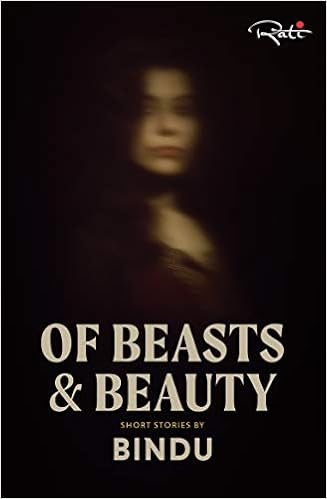
Of Beasts & Beauty : Short Stories By Bindu (Book Review: 4.25*/5) !!!


8th Book of 2021


Writing short stories is an art which is very difficult even for the writers who think and write continuously. Even the authors who publish full-fledged novel say that writing short stories are a different game altogether as you have limited words to define your character, make their situation familiar to the reader and also craft a moving story around it. I have read many compilations of short stories and anthologies but very few have made their mark in order to make me recommend them to my readers. I have just completed reading “Of Beasts and Beauty” written by the authoress, Bindu. The book consists of 13 short stories where each of them is distinct and unique and says something which will make you move uncomfortably in your seat. This is one anthology that I must say can get the due for the short story writers.


The short stories mentioned in this book plays basically on the theme of the title of the book which has two keywords: Beauty and Beasts. In some of the stories, you will find beauty and beast in two different characters whereas in other stories, you will find both of them imbibed in a single character itself. Either the beauty is turning into the beast or the beast is turning into the beauty. Many stories are women-oriented and I liked the way they are been handled where they don’t scream feminism and women-empowerment in your ears but speak it in a way that you understand a tough life that a woman in India has to go through.


The writing style of Bindu is quite advanced which will make the people reading literature resonate with the language and the stories. Some beginners might find tough to understand the language due to the advanced way of crafting a sentence – sometimes actively and passively. Also, the stories aren’t straight-forward for the school-going kid to understand them but they are meant for matured audience who have read some incredible stuffs or understand the language in which the authoress is speaking on some really deep topics with elegance and patience.


Every story is of around 13-15 pages and some of them are written so beautifully that you’ll feel that you are reading a poem or watching a painting for a long time. Bindu definitely has talent that speaks in each and every word in her stories. She is very particular about the message she wants to convey through her stories and you can relate to it by the climax of every story. After completing the book, I could understand the cover page of the book where a girl’s image is blur. I am keeping this a secret for you to read the book yourself and decode it.


I would like to mention few stories and the insights from it:

-          “The Longest Night” talks about a girl’s struggle and compromises in her job as an air-hostess.

-          “Munimji” speaks of how a woman is capable yet society judges her at every stage- either in her marriage or even after she is again single after her husband’s demise.

-          “Ramratni and the Far Gymkhana” is about the patience and humiliations a woman can keep bearing for her children.

-          “Samer” is about what drug addiction can do to you – how slave you become of it once you start possessing it.

-          “The Leopard Diaries” is the story I believe author got the chance to show her philosophical and spiritual side.

-          “Sculpture” is such a unique writing piece where you meet with a character of girl who sculpts and surprises everyone around her. Also, how she relates the sculpture with her own body experience is something I liked to read a lot.

-          “Meeting & Mating” makes you think if what we teach our children is something we ourselves understand and follow. I liked the way whole story is kept very light and the hard-hitting message is given only in the end.

-          The last story “I Fell in Love with a Trippy Gypsy!” is a nice end given to the book which talks about so many contemporary and social problems.


Now, talking about few drawbacks, I must say that the language of authoress is little tough for the new beginners to read. I believe authoress could have written few stories in a light language whereas few in the way she has written to give the book the balance it needed for catering to all class of readers. Secondly, few stories are dragged a bit which I believe makes it boring for a while in between. Lastly, I feel that considering few stories in the book, I was expecting more spiritual or philosophical take from it but author keeps it limited to the story itself without taking that dimension into consideration which I feel could have given little more life to some stories.


Overall, I must say this book shall be a favourite in every reader’s shelf who likes reading good and matured short stories with some darkness in it. I give this book 4.25 stars out of 5. I wish to read a full-fledged novel by the author Bindu in future.


PURCHASE THE BOOK HERE


Thanks.


WRITING BUDDHA 


Wednesday, December 9, 2020

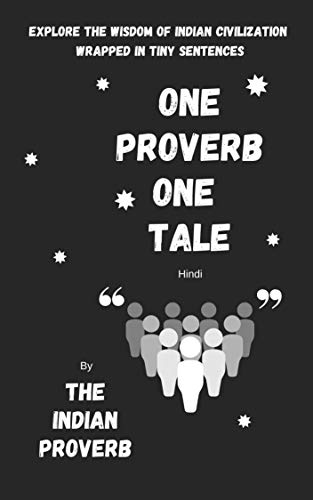
One Proverb One Tale by The Indian Proverb (Book Review: 4.5*/5) !!!


48th Book of 2020


I have always been very vocal about my detachment from the genre of books which are anthologies, collection of short stories or poems etc. Rather than being rigid, I still ensure that I keep on picking up the books which are associated with this genre in case I might fall in love with it one day. This made me pick up the book named “One Proverb One Tale” written by the team running the Instagram page named “The Indian Proverb” about which I was unaware before picking this book. The cover page also has the tagline that says “Explore the wisdom of Indian civilization wrapped in tiny sentences”.


This book has 44 proverbs written in Hindi from our ancient civilization. To explain it better, author has also shared a small tale for each of them for us to comprehend and understand the meaning behind the same. Along with the Hindi text, author has also ensured to provide a translation for the same in English which made it little more helpful for me to proceed ahead with reading the small tales. All the stories sound simple but speaks big volume. There are some of them which makes you think about your approach and tendency towards others and your work. Author has narrated all the tales simply as a story but gives strong messages without being preachy. This is what makes these stories interesting.


The language used for writing the tales and stories are very simple. The editing is perfect as author could have stretched these short tales but it has been beautifully ensured that it gets completed within 1-2 pages itself. There is consistency in all the stories as they are written in one template itself as if author is describing someone else’s story and making them realize where they went wrong or remained unaware. Generally, authors tend to write as a first voice or third voice in different stories but here, such unwanted trials are not made.


Now, talking about few stories which shall always stay with me:

“Overthinking” is a nice chapter speaking on how we stay hesitant of doing something and committing mistake or else we end up only thinking without doing anything.


"The Loss" speaks on how we end up losing what we own for something which we have only lusted upon.


"The Present-Past" is about our behaviour these days where we never enjoy what we are currently doing rather keep thinking of the next task in hand.


In "The Soldier", author talks about how we never look at a soldier with any kind of identity but only as a soldier who safeguards our nation.


How our worrying doesn’t have any medicine even with the doctors is nicely portrayed in "The Worry" where author tries to deliver the message of how we are getting unhealthy due to unnecessary worries.


“The Suspicion” chapter shows the humorous side of the author which came as a surprise in between.


"The Curse" is a very good take on karma and receiving kindness in return of giving kindness.


"The Noise" is so apt as per today's era where a person keeps boasting about himself and we get into inferiority complex but we later realize that the truth is different and we are better in many terms than the person.


"The Controllable" talks about the biggest lesson Bhagavad Gita gives- "Karam Karo, Fal ki chinta mat karo".


"The End" is the last chapter which tells the significance of Death and how it brings humility in a human being after realizing that everything could have ended in one moment itself.


Now, talking about the drawbacks, I couldn’t find any except that there are some typos and grammatical errors in the book.


Overall, this is a very unique concept which I have seen for the 1st time in last decade. This is a great light-read to which I am rating 4.5 stars out of 5.


PURCHASE THE BOOK HERE


Thanks.


WRITING BUDDHA 


About Me

My photo
Book Reviewer | Movie Reviewer | Bibliophile | Business Analyst