
23rd Book of 2025
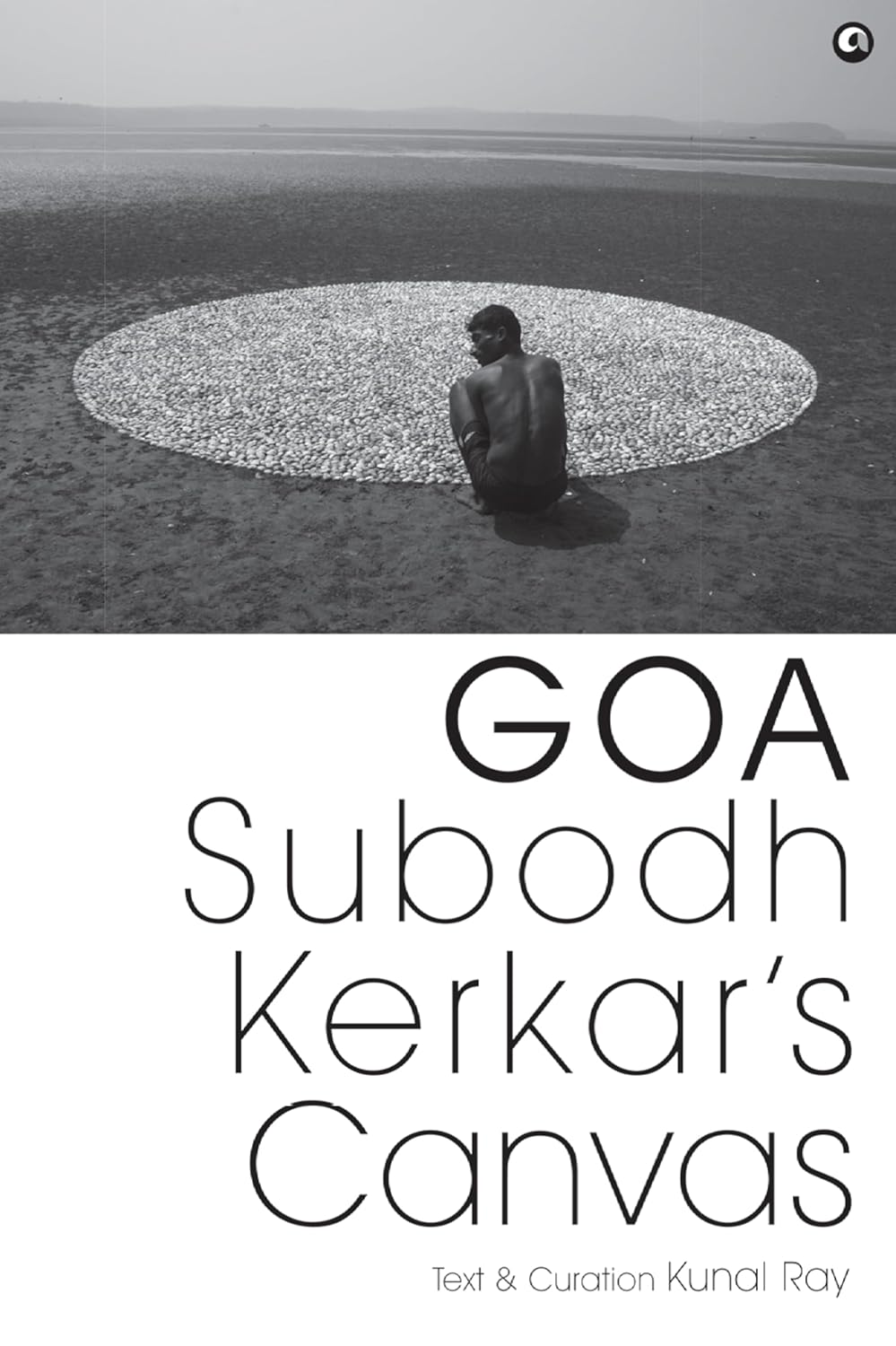
Some books are not meant to be read in a hurry; they ask to be absorbed the way one absorbs a place—slowly, through layers of memory, emotion, and silence. Goa: Subodh Kerkar’s Canvas is one such book. It does not merely document art; it meditates on a land, its waters, and the long shadows of its history. When I had received this book, I had thought that I would finish it within 15 minutes because of 35-pages text and rest of it displaying the artwork of the author but when I started reading it, these 35 pages took an hour for me to read. It sounded so poetic and serene that I really felt that the whole Goa and its history, silence, peace and ocean are running in front of my eyes.
Subodh Kerkar’s Goa is not the postcard paradise we are conditioned to admire. It is alive, bruised, playful, and deeply introspective. Through paintings, installations, and experimental works, Kerkar turns Goa into a living archive—one where beauty and discomfort coexist without apology. The book gently reminds us that art need not always soothe; sometimes, its role is to disturb just enough to awaken thought.
What makes this collection compelling is the artist’s refusal to separate aesthetics from responsibility. Alongside lyrical representations of houses, boats, and coastal life, there exists an unflinching engagement with darker chapters of Goan history—colonial violence, the Inquisition, and the exploitation that arrived with foreign rule. Yet, Kerkar never allows the narrative to become heavy-handed. There is wit, irony, and even playfulness—most memorably in works that reimagine historical figures through absurd, almost childlike symbolism.
Kerkar’s gaze is observant and democratic. Fisherfolk, food, shells, laterite, sand, and sea are all granted equal dignity. His choice of material—terracotta, crochet, ink, light, even living oysters—blurs the line between art and environment. The ocean is not a backdrop here; it is a collaborator. Nature breathes through these works, reminding us that culture and ecology are inseparable.
Reading this book feels like walking barefoot along a beach scattered with memories—some warm, some sharp. It urges the reader to look again at Goa, beyond tourism and nostalgia, and to recognize it as a space of resilience and resistance. In doing so, Goa: Subodh Kerkar’s Canvas becomes more than an art book; it becomes a quiet philosophical statement on place, identity, and the enduring power of creative dissent.
It has been for the very first time that I have read a book based on painting where the author’s intent and approach is mentioned first and then the book is full of his artwork that speaks for itself. The book made me feel like visiting author’s museum in Goa as well. If you have ever travelled to Goa or it’s your favorite destination like me, please get this book as your coffee table favorite. I give this 4.5* out of 5.
Thanks!
WRITING BUDDHA

.JPG)


0 comments:
Post a Comment