Thursday, June 24, 2021

Aksara Bhagavad Gita by Haribakth & Vaishnavi (Book Review: 4.5*/5) !!!

 21st Book of 2021


As all of you know that Bhagavad Gita is one of my favourite passion and I just love going to it whenever I feel doubtful, sad, clueless, and directionless. Every page of it has an essence that ends up giving you the motivation and meaning you are looking forward to. I find many people talking about the purpose of life. Most of them say just for the sake of it but the people who really wish to seek the meaning of this question tend to turn towards Bhagavad Gita and get the answer they were searching for. The biggest question arises for people when they wish to get into the reading of Bhagavad Gita is – Which is the original Bhagavad Gita and which will give me the best and real meaning of it. This happens because almost all the books are translated and explained by different authors hence a person finds it hard to find the real Bhagavad Gita.


All the problems a reader faces in searching a Gita and then understanding it is discussed in this new book I just completed reading after 4 months. It is named “Aksara Bhagavad Gita” written by the combo of father and daughter – Haribakth and Vaishnavi. Haribakth is the pen name of Mr. Ravindra Rao. Before this, I read the book called “19th Akshauhini: Algorithm of the Gita” written by the same father-daughter duo and it was surely a new experience for me. Haribakth writes every book from a research point of view which sounds like published papers by big Universities of the world. I like the way all the points are articulated and summarized in all the chapters.


The book is of around 600 pages, and it needs a lot of patience for the reader to finish reading it. If you have ever wondered why we find contradiction in several shlokas of Gita (or we perceive it in such manner), then the whole effort of this book is to ensure you understand them well along with the context of it.  It has been written in a conversational discussion mode between the two characters- like the tone in which the original Bhagavad Gita is written. A character asks questions related to her queries on Bhagavad Gita which is then provided as a detailed answer by another character resolving all the doubts and problems. I liked how the characters are evolved from the authors’ 1st book and anyone who has read that will feel nostalgic.


You will start feeling the arrival of the main content of the book from the chapter named “Navaratri Conversation” which speaks about lot of subjects such as how Gita is read, heard, and understood from a semantic perspective but not from conceptual perspective – why only God narrated the Gita and not entrusted upon someone else for the same – Juxtaposition – Dharma – Surrender – Liberation – Sins  - Sacrifices – Knowledge and Silence – God on Memory – Shunya and its reference with God – examples of syllogism in the Gita etc. There are many other ideologies that the author discusses in this chapter giving reference of the chapters which shall arrive in the future in the book. This is basically like a precap of the whole book. In case you don’t have time, you can go through this section itself and you are done knowing a lot of things about Gita and its correct perception.


After this – author begins the real debate and names all the chapters in this section as Kurukshetra. I liked this metaphor as the Gita was actually spoken on the ground of Kurukshetra or say, the Kurukshetra War, and even here in the book, the chapters with real debate on all the main pointers are named as Kurukshetra. This segment discusses many primary teachings of Gita. Author gives many references of how the God is Supreme and no one is beyond him but He is beyond everyone. I liked how author gives the example and reasoning of Algebra to discuss the topic of Perishable vs Imperishable. Author also provides many pointers to state why Gita is complete and self-contained. The book also talks about definition of different concepts such as Spiritual and Mundane, Temporary and Permanent, Crime and Sin etc. Author also talks in detail about one of the important aspects discussed in Gita i.e. three types of Guna – Sattva, Rajas and Tamas. We are also explained the concept of how God is the cause of all actions, gunas – the performer and we – just the medium through which the action is performed.


There are many such explanation, detailing and learnings that are provided through this book which will make your hold on Gita and its messaging more solid and powerful. I liked the tables at the end or between of every chapter which helps in understanding the summary of the section in a very professional manner. The pointers/bullets used throughout the book emphasize every point that the debate discussions need to make. Generally, as a reader, we make notes of all the important points in the book but here, the book is itself written in a way that every sentence of it is important. Just like original Bhagavad Gita, you read any page of this book, and it is going to be insightful for you and the situation you are dealing with. Authors knew it very well how to entertain and inform the readers who are seeking knowledge on Bhagavad Gita and the book is drafted in a very mature manner in the same way.


Talking about the drawbacks of the book, I must say that the length of the book is the biggest concern. This could have either be divided into two different parts so that it could motivate readers to pick it up because a book with 600-pages in such busy life is always going to be a tough decision to read. Secondly, the pricing of the book is on a very high side. I believe it should also be cut short. Thirdly, I must say that the book doesn’t provide a consistent way of writing as you find dialogues in between, then debates, then suddenly pointers and unexpectedly, a table format inserted between them. Author could have worked a little on that front.


Overall, this is a book which I believe you can pick only after you have little knowledge on what Gita is; or even if you have read easier version of Gita by Indian authors. I give this extremely researched and nicely compiled book 4.5 stars out of 5. Recommended to everyone who loves reading Gita or seeks to know the answer on What is God or What is the Purpose of Life.


PURCHASE THE BOOK HERE


Thanks.


WRITING BUDDHA 


Wednesday, June 23, 2021

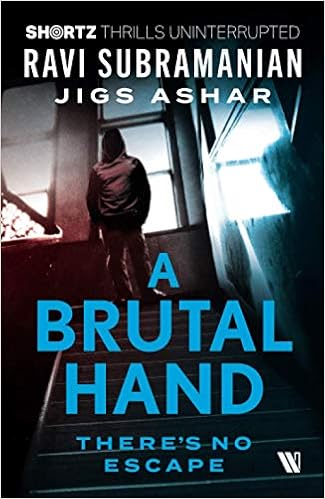
A Brutal Hand by Ravi Subramanian & Jigs Ashar (Book Review: 4.25*/5) !!!


20th Book of 2021


Ravi Subramanian’s new venture called “Shortz Thrills Uninterrupted” is a very nice gesture to promote other skilled authors who can write good thrillers in as less words as possible. He has been himself the face of Indian thrilling world for more than a decade and frankly speaking, I got into the world of suspense and thriller through his banking novels. I must say that I remember every experience of reading his books and have learnt so much about literature through the perfection he has in blending elements into his stories. This time, the book I have read under this venture is “A Brutal Hand” which is co-written with Jigs Ashar, the author who has written individual books too but getting featured here seems to be doing wonders with his increasing fan following.


The book comes with a tag line that says, “There’s no escape”. The book is summed up in around 175 pages and I must say this is one of the shortest thrillers I have read which has appealed me. Kudos to Westland Publication. It kept me grasped and intrigued right from the first page. Author has written a perfect page-turner which makes you want to know how the investigation will proceed and how the killer will be identified. The narration is quite good as even though the story keeps moving on a fast pace, you find it bit easy to go hand-in-hand with it. You never feel the complexities in the plot even when this is a thriller genre book. I don’t think there could have been a better way to write a short thriller than this.


All the chapters are so nicely divided here that you can imagine each of them as different scenes and visualize it like frame changes in movies and web-series these days. The characters are very nicely woven that you can relate with each one of them. Even when there are few characters who are spooky, you still feel that you are with them, and you can feel what they are going through. There are many worlds involved here – like psychiatrist, jail, police, rehab etc. You will love how the character from different world gets connected to each other when the police start investigating the case. I really found it very appropriate and precise.


Throughout the story, I could keep guessing the murderer in different people but when the unexpected happened in the climax, I really got very happy to be proved wrong as it tells you that the book you picked up has beaten your perceptions. I just felt that author could have kept the interrogation round little more descriptive and helped us understand the psyche and emotions of the killer in a better way. Reading this climax, it felt as if we are just told who the killer is in a Breaking News format and why did he kill the victims in just a formal manner. There should have been a Longz version of this part even if the whole story is written in the shortz format.


Overall, this book will place Jigs Ashar in the top list and you will find the presence of Ravi Subramanian in this story for sure. I give this book 4.25 stars out of 5. This book has the potential to be adapted into a web-series format due to its fast-paced and intelligent investigation elements.


PURCHASE THE BOOK HERE


Thanks.


WRITING BUDDHA 


Wednesday, June 16, 2021

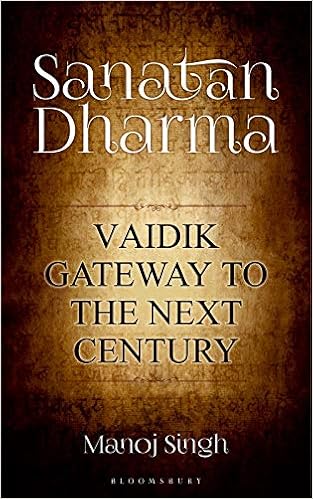
Sanatan Dharma: Vaidik Gateway To The Next Century by Manoj Singh (Book Review: 4.5*/5) !!!


19th Book of 2021


There are very few authors who are not writing for their passion or hobby but for a mission – a mission to change something around them for a better future. Some authors write to find the change instantly and enjoy it happening in their course of life but there are few who are writing about implementations if performed even today will find its result long after they are gone from the world. Such authors are truly working towards a very big goal that you and I can’t even judge by what little bit we know about them. One such author I have observed since last few years is Manoj Singh. He has been a staunch believer of Sanatan Dharma and the practices it offers and his whole attitude is to spread it as much as possible and make people understand the benefit of adopting it.


I am just done reading his first major English release named “Sanatan Dharma” which comes with a tagline that says “Vaidik Gateway to the Next Century”. Before this, I have read Manoj Singh’s Hindi books such as “Vaidik Sanatan Hindutva” and “Main Aaryaputra Hoon” and really liked the concepts shared in them. This book is almost an English translation of “Vaidik Sanatan Hindutva” as I found many chapters which are exactly what I read in the Hindi book. This 312-pages book is going to be a great revolution in the English-reading audience as a book of this nature was missing from the picture till now. Whatever book we read on religion or dharma till now has been in fiction format where the authors have interpreted the story in their own way rather than telling it As It Is. Here, for the very 1st time, people are going to read a book which talks about why certain ancient rituals were performed and celebrated and what relevance it has for us.


Manoj Singh has very nicely drafted this book in 5 different parts where he sets a narrative on how Sanatan Dharma guides us in different sectors such as - Waste Culture of Science, Vaidik Aarya and Sanatan Culture, Nature in Sanatan Culture, Sanatan Jeevan Darshan and Challenges of the Modern Human World. Author discusses how Sanatan Dharma is generally perceived to be praying Idols or images of God and is thus, clueless, and stupid. He, then, clarifies how Sanatan always worshipped nature and everything that is celebrated or performed as festivals or rituals were always based on the movement of planets and change in climate. This is a perspective I have always read only through Manoj’s writing and no author has ever given such emphasis on the importance given to Nature by our religion or ancient culture ever.


Author picks up Saraswati river as an example and tells how it has got depleted due to everyone’s negligence towards rivers and waterbodies and now people consider it as a myth. Similarly, he says that all such big rivers etc. will get depleted one day and people will start believing that all those important aspects of our Nature are a myth. Author then talks on how noise pollution, waste management, population growth, overcrowding has further taken our planet to a stage where it’s becoming a dangerous one to live. Singh focuses on how all of us are become “Just Takers, Not Givers”. He picks up many examples to share and you will agree with almost all of them even if it sounds harsh and blunt. You end up realizing the truth with every chapter.


Author talks about many value systems Sanatan Dharma observed such as importance of agriculture, time management, sanskar systems, Yoga etc. Author then moves on to the 3rd section and gets into every festival, ritual and fasting that we keep and makes us understand why it is done. We know how our generation questions the logic behind everything we are asked to do in the name of rituals/festivals and unfortunately, even parents are not able to provide the proper reasoning in response. But, here, Manoj does it so beautifully that you would want to shout from the rooftop and tell everyone about your new awareness on why a particular festival is celebrated and clear everyone’s doubt. Author covers the important days of Sanatan Dharma such as no moon day, full moon day, solar and lunar eclipse, kuan pujan, tree worshipping, cow worshipping, shraddha, narmada parikrama, kumbh mela, Ekadashis, Mahashivratri etc. Author has also helped us understand the meaning of important mantras such as Mahamrityunjay Jaap and Gayatri Mantra.


Lastly, author discusses about the Jeevan Darshan, Vedas, Ahimsa, Dharma, Shanti and Indra which gives us the major crux of what Sanatan actually is. Author goes into a lot of detailing here too as he explains about type of religious texts, four great mantras of the Veda-Upanishads, basic principles of Sanatan, mythological statements, Om Shanti Mantra etc. In the end, before completing the book, Singh talks about how challenging it has become to follow the Dharma in future due to so many conflicts and wrong portrayals in the current scenario. Author makes us aware of the obstacles we will have to fight against to observe and carry forward the Sanatan Dharma and protect our planet before its too late.


Manoj Singh’s writing style is very simple unlike his Hindi books. I am glad he wrote a book in English because this has made it very easy for people not friendly with reading Hindi texts know about such important stuffs in comfortable language. The division of chapters and brief explanation makes even the complex concepts sound like simple facts. I must really mention here about the incredible research Manoj has undergone to bring such varied concepts compiled in a single book. Anyone of you who has been searching for the real origin or belief on which Hinduism or Sanatan Dharma stands should certainly pick this book as it has the essence which will clear many queries and doubts you had about this very popular religion and lifestyle.


Now talking about the drawbacks, firstly, as I have also mentioned it before, author becomes too critical of science and scientists. I believe he should take a little positive tone while writing because then the writing looks like a retaliation to someone’s statement and not something which you wanted to speak from your heart. Secondly, author repeats few things too much in multiple chapters. He needs to draft his beliefs more properly and ensure that once when he writes about it, it should be so strongly put that there’s no need to repeat it to make readers focus on it more. Thirdly, I find author gets confused at many places on what stand to take- Spiritual, Religious, Practical or Scientific which makes few explanations going haywire.


Overall, this is a very good book, and it has a lot of information for you to keep re-reading this book and get memorized with all of them to follow it regularly. I give this book 4.5 stars out of 5. Please pick it up if you have always wanted to read something which is religious yet logical.


PURCHASE THE BOOK HERE


Thanks.


WRITING BUDDHA 


About Me

My photo
Book Reviewer | Movie Reviewer | Bibliophile | Business Analyst